Country study
Spain: kingdoms, faiths and an imperial monarchy
Spain’s history is not a simple march towards a unified nation. It is a story of Roman provincial rule, Islamic state formation, Christian expansion, dynastic union, overseas empire and uneven centralisation.
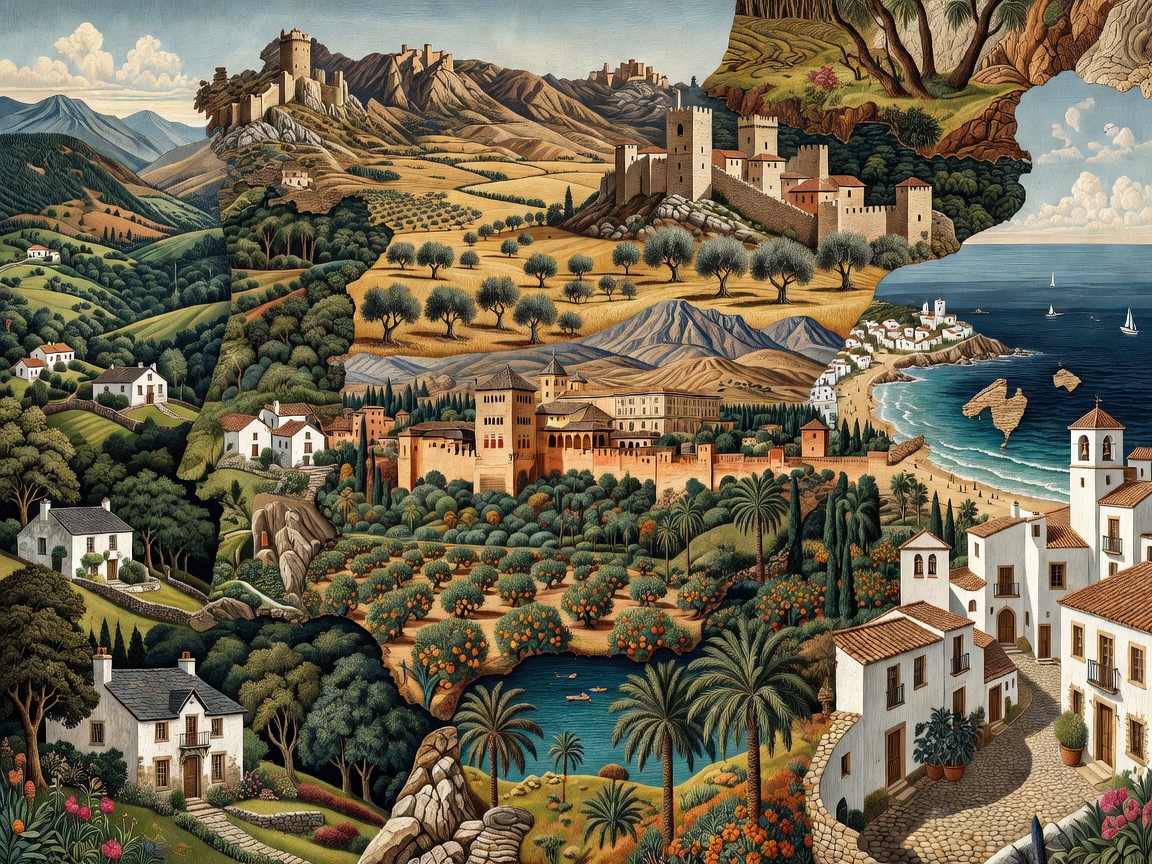
What survived from Rome?
Roman Hispania left roads, cities, legal habits, Latin languages and an enduring Christian geography. Roman rule was not uniform: provinces differed in economy and urban life, while local elites mediated imperial authority. After the western empire fragmented, Visigothic rulers governed from Toledo and adopted Christianity, but their kingdom remained vulnerable to succession disputes and regional power.
The Muslim conquest beginning in the eighth century created al-Andalus, whose political centre and borders changed repeatedly. Córdoba became a major centre of administration, scholarship and craft, while Christian polities developed in the north. The peninsula therefore contained overlapping legal, religious and linguistic communities rather than two perfectly separate civilisations.
How did Christian kingdoms expand?
The long process often called the Reconquista was not a single campaign directed by one state. León, Castile, Navarre, Aragon and Portugal pursued different alliances and interests. Warfare, tribute, settlement and dynastic marriage all mattered. The capture of Toledo and later Córdoba and Seville shifted the balance, but Muslim rule continued in Granada until the late medieval period.
Expansion changed society. New towns received charters, military orders gained land and frontier communities developed distinctive privileges. Jewish and Muslim populations contributed to urban economies and administration, yet periods of coexistence were accompanied by pressure, segregation and violence. The later movement towards religious uniformity narrowed the plural character of many cities.
What did dynastic union change?
The marriage of Isabella of Castile and Ferdinand of Aragon joined two crowns without instantly creating a single central state. Each retained institutions, laws and fiscal arrangements. Their monarchy coordinated diplomacy and warfare more effectively, but the composite structure remained visible for centuries.
Under the Habsburgs, Spain became the core of a wider monarchy that included territories in Europe and the Americas. Silver from the Americas supported military commitments but also contributed to financial strain, inflationary pressure and dependence on credit. Imperial reach brought wealth and coercion together. It cannot be understood only as a story of exploration; it was also a system of conquest, forced labour and cultural transformation.
Why was the eighteenth century important?
The War of the Spanish Succession altered the balance between the Bourbon monarchy and the historic territories of the Crown of Aragon. Bourbon reforms strengthened central administration and sought more regular taxation and military organisation. These reforms did not erase regional identities, but they changed the relationship between court, provinces and local institutions.
How did modern Spain emerge?
The Napoleonic invasion, the Constitution of Cádiz, civil conflict and the loss of most American colonies unsettled the old monarchy. The nineteenth century brought alternating liberal and conservative projects, military intervention in politics, industrial growth concentrated in particular regions and debates about regional autonomy. These tensions continued into the twentieth century, when dictatorship and civil war left deep political and social divisions.
The democratic constitution that followed dictatorship established a parliamentary monarchy and recognised autonomous communities. Historical memory remains contested, especially around the civil war, repression and the interpretation of national identity. Spain is best read as a layered political space: central institutions matter, but regional languages, economies and memories remain essential to the whole.