Comparative study
Modern change: industry, nations and contested memory
Modern history brought factories, mass politics, empire, war and new claims to citizenship. Spain, France and Italy shared pressures but answered them through different institutions and political traditions.
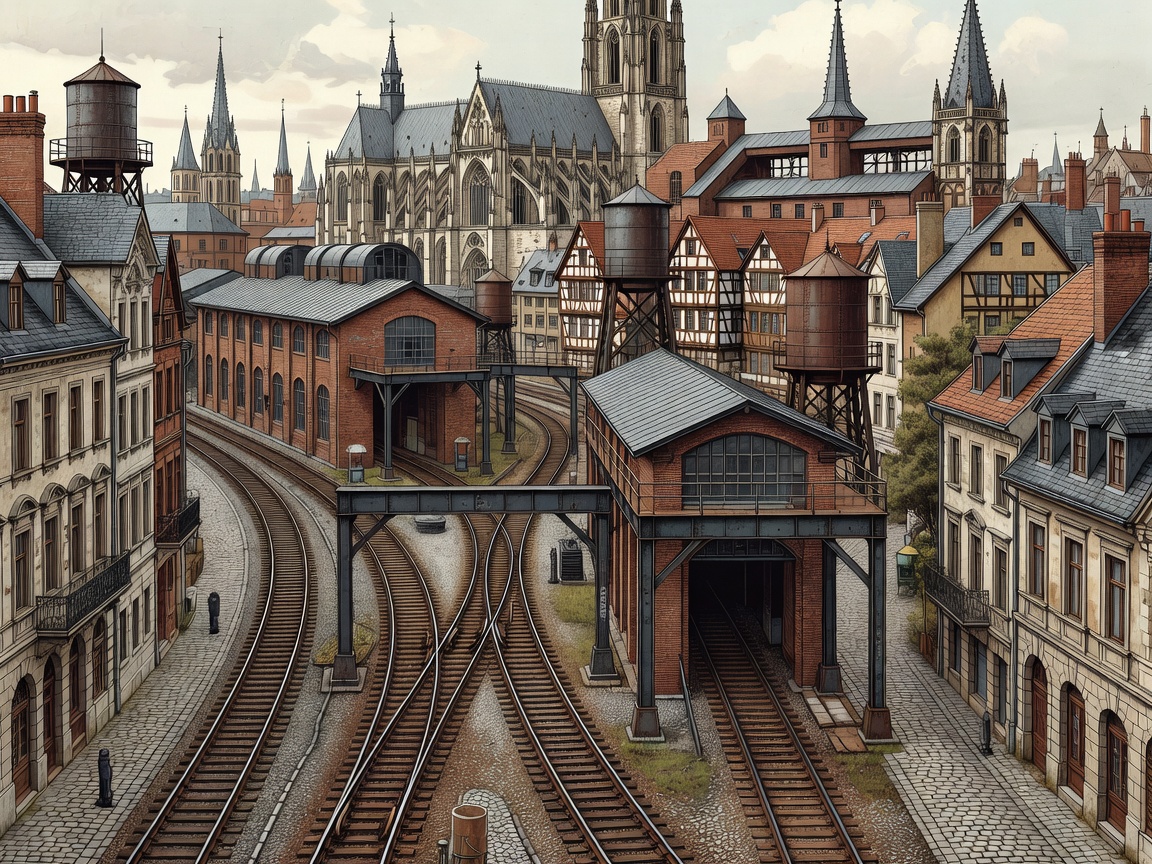
How did industrialisation alter society?
Industrialisation was uneven across all three countries. France combined manufacturing with substantial rural regions. Northern Italy industrialised more strongly than the south, creating a durable regional divide. Spain developed major industrial centres in Catalonia and the Basque Country alongside agricultural economies elsewhere.
Factories changed work, migration and class politics. Railways connected markets and strengthened central administration, while urban growth created new demands for sanitation, schooling and representation. Industrial change did not erase older hierarchies; it layered wage labour and mass organisation onto them.
What did nationalism promise?
Nationalism presented the nation as a community entitled to political sovereignty. In Italy it supported unification; in France it became closely associated with republican citizenship and military service; in Spain it competed with regional nationalisms and imperial decline. Each version used language, schooling, public ceremonies and historical memory to define belonging.
National identity could unify citizens, but it could also exclude those marked as religious, linguistic or regional outsiders. The question was not whether nationalism existed, but which history and culture it treated as central.
Why did empire matter?
France and Italy maintained colonial projects, while Spain’s modern politics were deeply shaped by the loss of its American empire and later colonial conflicts. Empire supplied resources and strategic ambitions, but it also depended on coercion and racial hierarchy. Decolonisation altered migration patterns and challenged national stories that had presented imperial rule as a civilising mission.
How did dictatorship and war change politics?
Spain experienced civil war followed by Francoist dictatorship. Italy’s liberal state gave way to fascist rule, war and occupation before republican reconstruction. France endured military defeat, occupation, the Vichy regime, resistance and post-war institutional change. These experiences left different constitutional settlements and different public arguments about responsibility.
Democracy after authoritarianism required more than elections. It involved courts, parties, civil rights, education and the difficult work of addressing violence. Historical memory remains political because it shapes whose suffering is recognised and which institutions are trusted.
What is citizenship now as a historical question?
Citizenship can be read through law, voting, education, military service, welfare and access to public institutions. In all three countries, formal equality expanded over time while social and regional inequalities persisted. European integration added a layer of shared governance without removing national institutions.
The comparison is most useful when it avoids a single model of modernity. France’s central state, Italy’s regional variety and Spain’s autonomous structure each reflect earlier conflicts. Modern change is therefore cumulative: older borders, memories and institutions continue to shape new political arguments.